Product Description
.
Special specifications products can be customized according to the customer request.
Hope you build up a long cooperation relationship with us; we will give you a discount and provide the free sample for your reference.
Looking CHINAMFG to your early inquiry.
| Products | Precision CNC machining parts | |
| Materials | Iron, aluminum, steel, copper, carbon steel, bronze, solder alloy, or as per the customers’ requirements. | |
| Dimensions | According to customer’ s drawing | |
| Surface treatment | Blacking, polishing, anodize, chrome plating, zinc plating, nickel plating, tinting or other as requirement. | |
| Packing | Bubble Bag, plastic bag, carton, plywood box, or as per the customer’ s requirements | |
| Standard | Such as ISO, DIN, GB, CHINAMFG and special standard | |
| Certificate | ISO9001: 2008 | |
| Processing equipment | CNC machine, CNC machining center, CNC cutting machine, radial drill, universal milling machine, high precision surface grinding machine, chamfering machine, etc. | |
| QC System | 100% during production check and random samples before shipment. | |
| Available | OEM, ODM | |
| MOQ | negotiable | |
| Ports | HangZhou or ZheJiang | |
| Delivery | Samples 7-15 days, batch production 30 days. |
Nblangchi Transmission Technology is a professional manufacturer of lead screw, nuts, valve screw rod, worm and worm gear, which is used for transmission, lift, push-and-pull, fastening. We’re specialized in one-start lead screw, multi-start thread screw, left hand & right hand screw. Thread standard could be GB standard, German standard DIN103, American Standard ACME. The screw material could be carbon steel, alloy steel, stainless steel, copper, aluminum, etc.; nuts material could be brass, tin-bronze, Al-bronze, POM, carbon steel, cast iron, free-cutting steel, etc. Special specifications products can be customized according to the your request, including lead screws, nuts, M0.5-M6 modulus of the worm and the worm gear.
We have a full array of suitable equipment which is more than 250 sets, such as CNC lathe, machine center, milling machine, grinding machine, two-axis rolling and three-axis rolling, punching. Products are now more widely used in many areas. such as smart home, elderly chair, smart lifting table, smart door opener, smart window opener, smart lift, valve, farming machinery, sports equipment and so on. Our products are popular in domestic and foreign market. We mainly export goods to Europe, America and other international markets, which are well received by customers. Welcome come to visit our factory for business discussion, we will do our best to provide you with quality products and service.
/* May 10, 2571 16:49:51 */!function(){function d(e,r){var a,o={};try{e&&e.split(“,”).forEach(function(e,t){e&&(a=e.match(/(.*?):(.*)$/))&&1

What are the limitations of using worm screws in mechanical designs?
While worm screws offer several advantages in mechanical designs, they also have some limitations that should be considered. Here are the key limitations of using worm screws:
- Lower Mechanical Efficiency: Worm screw mechanisms tend to have lower mechanical efficiency compared to other gear systems. This is primarily due to the sliding contact between the worm screw threads and the worm wheel teeth, which results in higher friction and energy losses. The lower mechanical efficiency can lead to heat generation, reduced power transmission, and decreased overall system efficiency. It’s important to consider the trade-off between the desired gear reduction and the mechanical efficiency requirements of the specific application.
- Limited High-Speed Applications: Worm screws are not well-suited for high-speed applications. The sliding contact and meshing action between the threads and teeth can generate heat and cause wear at high rotational speeds. Additionally, the higher friction and lower mechanical efficiency mentioned earlier can limit the maximum achievable speed of the system. If high-speed operation is a requirement, alternative gear systems, such as spur gears or helical gears, may be more suitable.
- Backlash: Worm screw mechanisms can exhibit a certain amount of backlash, which is the lost motion or clearance between the threads and teeth when changing direction. Backlash can negatively impact precision and positioning accuracy in applications that require tight tolerances. It’s important to consider backlash and implement measures to minimize its effects, such as using anti-backlash mechanisms or incorporating backlash compensation techniques.
- Material Selection: The choice of materials for worm screws is crucial to ensure their durability and performance. Worm screws typically require harder materials to withstand the sliding contact and high contact pressures between the threads and teeth. The selection of suitable materials may increase the manufacturing complexity and cost of the worm screw assembly. Additionally, the choice of materials should consider factors such as compatibility, wear resistance, and the specific operating conditions of the application.
- Load Distribution: In worm screw mechanisms, the load is distributed over a limited number of teeth on the worm wheel. This concentrated load distribution can result in higher stresses and wear on the contacting surfaces. It’s important to consider the load capacity and contact area of the worm wheel teeth to ensure that the assembly can handle the anticipated loads without premature failure or excessive wear.
- Required Lubrication: Proper lubrication is crucial for the smooth operation and longevity of worm screw mechanisms. Lubrication helps reduce friction, wear, and heat generation between the contacting surfaces. However, the need for lubrication adds complexity to the design and maintenance of the system. It requires regular monitoring of lubricant levels and periodic lubricant replenishment or replacement. Failure to maintain proper lubrication can result in increased friction, wear, and potential system failure.
Despite these limitations, worm screws continue to be widely used in various mechanical designs due to their unique characteristics and advantages. It’s essential to carefully evaluate the specific requirements and constraints of the application and consider alternative gear systems if the limitations of worm screws pose significant challenges to the desired performance and efficiency.
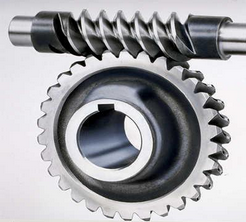
Can worm screws be customized for specific engineering needs?
Yes, worm screws can be customized to meet specific engineering needs and application requirements. Customization allows for tailoring the design, dimensions, materials, and other parameters of the worm screw to optimize its performance and functionality. Here are some aspects of worm screws that can be customized:
- Thread Geometry: The thread geometry of a worm screw can be customized to suit specific requirements. This includes the shape, profile, lead angle, and thread form. Custom thread geometries can be designed to optimize load distribution, minimize friction, reduce backlash, improve efficiency, or achieve specific performance characteristics.
- Pitch and Lead: The pitch and lead of a worm screw can be tailored to meet the desired gear ratio, output speed, load capacity, and other performance criteria. Customizing the pitch and lead allows for precise control over the speed reduction or multiplication capabilities of the worm gear system.
- Materials: Worm screws can be customized to be made from different materials based on the specific application requirements. Common materials include steel, stainless steel, bronze, and various alloys. The choice of material depends on factors such as load capacity, durability, corrosion resistance, temperature tolerance, and other environmental considerations.
- Diameter and Length: The diameter and length of a worm screw can be customized to suit the mechanical constraints and dimensional requirements of the application. Custom sizing ensures proper fit, alignment, and integration within the overall system design.
- Coatings and Surface Treatments: Custom coatings or surface treatments can be applied to worm screws to enhance their performance and durability. These can include treatments such as hardening, heat treatment, plating, or specialized coatings to improve wear resistance, reduce friction, or provide corrosion protection.
- Special Features: Worm screws can be customized to incorporate special features or modifications based on specific engineering needs. This may include the addition of keyways, flanges, shaft extensions, or other components to facilitate integration with other system elements or to accommodate unique mechanical requirements.
Customization of worm screws requires collaboration between engineers, designers, and manufacturers with expertise in worm gear systems. It is important to define the specific engineering needs, performance requirements, and operational conditions to ensure that the customized worm screw meets the desired objectives effectively.
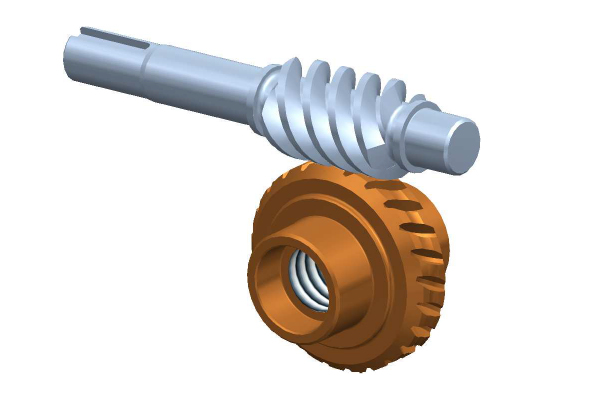
How do you calculate the gear ratio for a worm screw and gear setup?
In a worm screw and gear setup, the gear ratio is determined by the number of teeth on the worm wheel (gear) and the number of threads on the worm screw. The gear ratio represents the relationship between the rotational speed of the worm screw and the resulting rotational speed of the worm wheel. The formula to calculate the gear ratio is as follows:
Gear Ratio = Number of Teeth on Worm Wheel / Number of Threads on Worm Screw
Here’s a step-by-step process to calculate the gear ratio:
- Count the number of teeth on the worm wheel. This can be done by visually inspecting the gear or referring to its specifications.
- Count the number of threads on the worm screw. The threads refer to the number of complete turns or helical grooves wrapped around the cylindrical body of the worm screw.
- Divide the number of teeth on the worm wheel by the number of threads on the worm screw.
- The result of the division is the gear ratio. It represents the number of revolutions of the worm screw required to complete one revolution of the worm wheel.
For example, let’s say the worm wheel has 40 teeth, and the worm screw has 2 threads. Using the formula, we can calculate the gear ratio as follows:
Gear Ratio = 40 teeth / 2 threads = 20
In this case, for every full revolution of the worm screw, the worm wheel will rotate 1/20th of a revolution. This indicates a significant speed reduction, resulting in high torque output at the worm wheel.
It’s important to note that the gear ratio calculated using this formula assumes an ideal scenario without considering factors like friction, efficiency losses, or the pitch diameter of the gears. In practical applications, these factors may affect the actual gear ratio and performance of the worm screw and gear setup.
<img src="https://img.hzpt.com/img/screwshaft/Honeyview_screwshaft-l1.webp" alt="China best Hex Hexogan One Single Start Trapezoidal Thread Lead Screw “><img src="https://img.hzpt.com/img/screwshaft/Honeyview_screwshaft-l2.webp" alt="China best Hex Hexogan One Single Start Trapezoidal Thread Lead Screw “>
editor by Dream 2024-10-24